
Tobacco use affects all Nunavummiut and the land around us. Laws around tobacco use are designed to protect our community members, especially children and youth. Explore this section to learn more.

Tobacco use affects all Nunavummiut and the land around us. Laws around tobacco use are designed to protect our community members, especially children and youth. Explore this section to learn more.
Tobacco use affects all Nunavummiut and the land around us. Laws around tobacco use are designed to protect our community members, especially children and youth. Explore this section to learn more.
Tobacco use affects all Nunavummiut and the land around us. Laws around tobacco use are designed to protect our community members, especially children and youth. Explore this section to learn more.
Tobacco use affects all Nunavummiut and the land around us. Laws around tobacco use are designed to protect our community members, especially children and youth. Explore this section to learn more.
On May 31, 2023, Nunavut’s Tobacco and Smoking Act (TSA) came into effect to strengthen and replace the Tobacco Control and Smoke-Free Places Act that was 15 years old.
The Tobacco and Smoking Act (TSA) was designed to protect Nunavummiut from harmful second-hand smoke, especially children, pregnant women and individuals with health conditions, by ensuring that public places are smoke-free.
The Tobacco and Smoking Act (TSA) tells us where tobacco, vaping and other electronic cigarette devices, and cannabis can be used, who can buy it and restricts how retailers sell it.
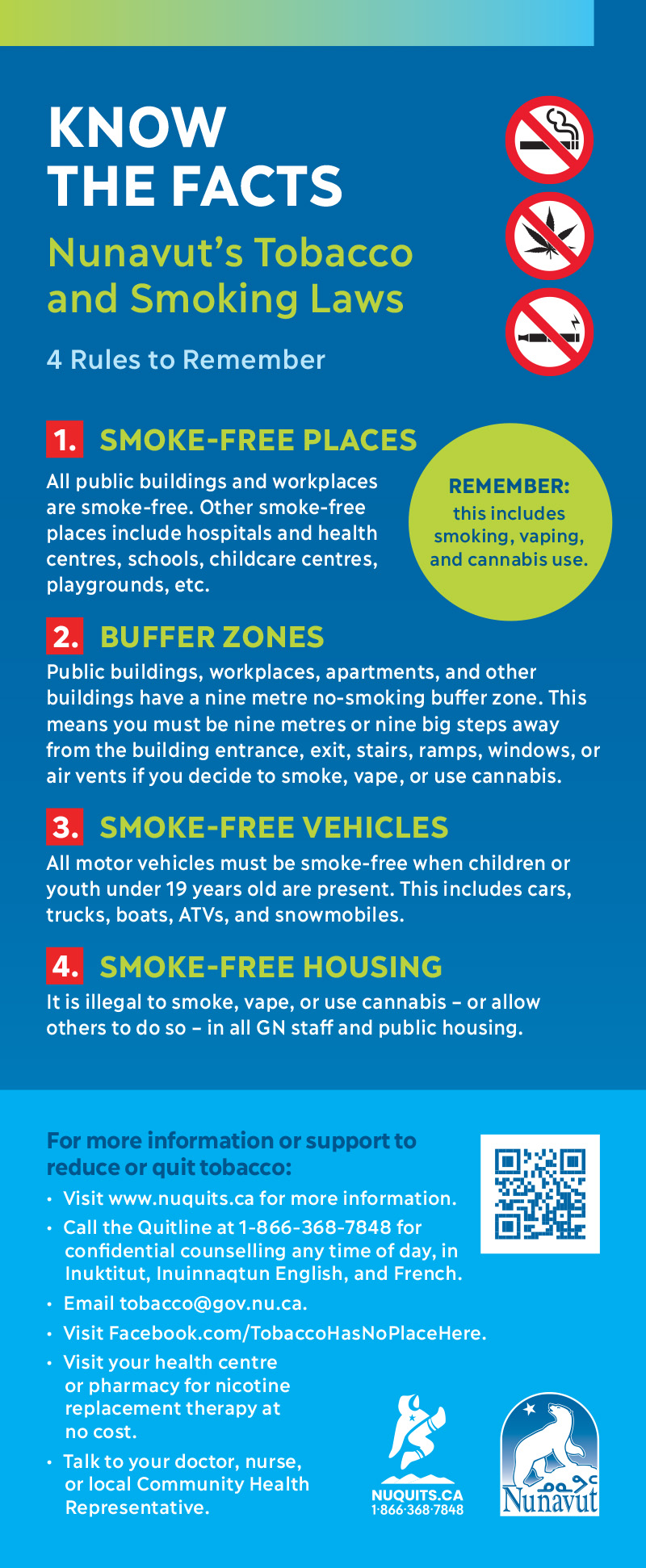
Important changes to the legislation:
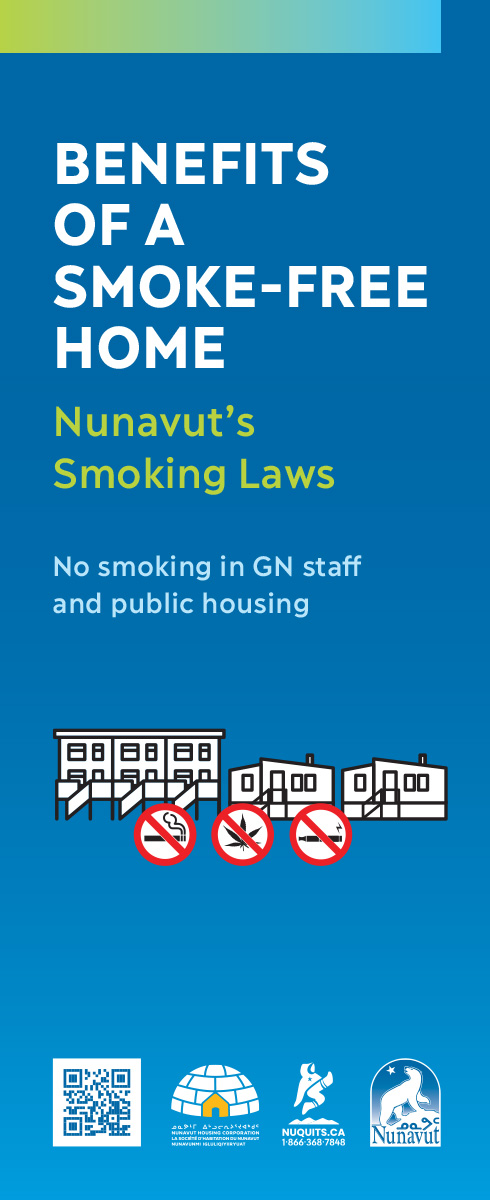
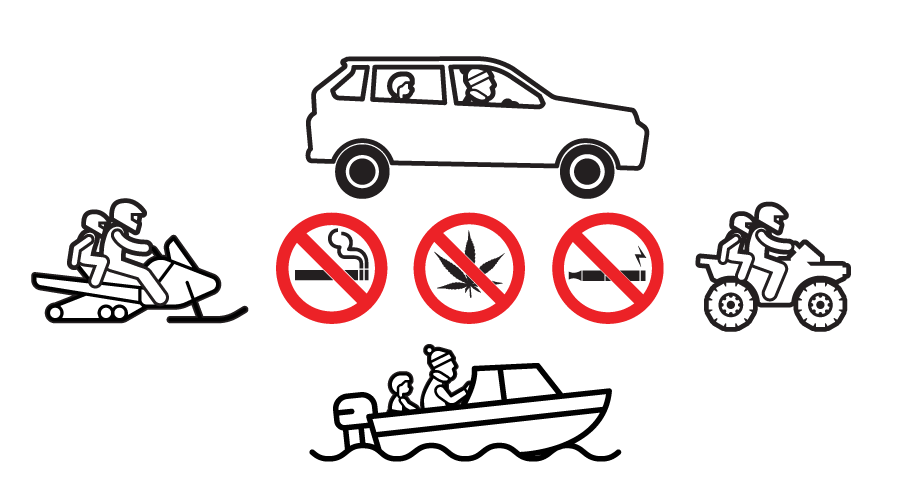
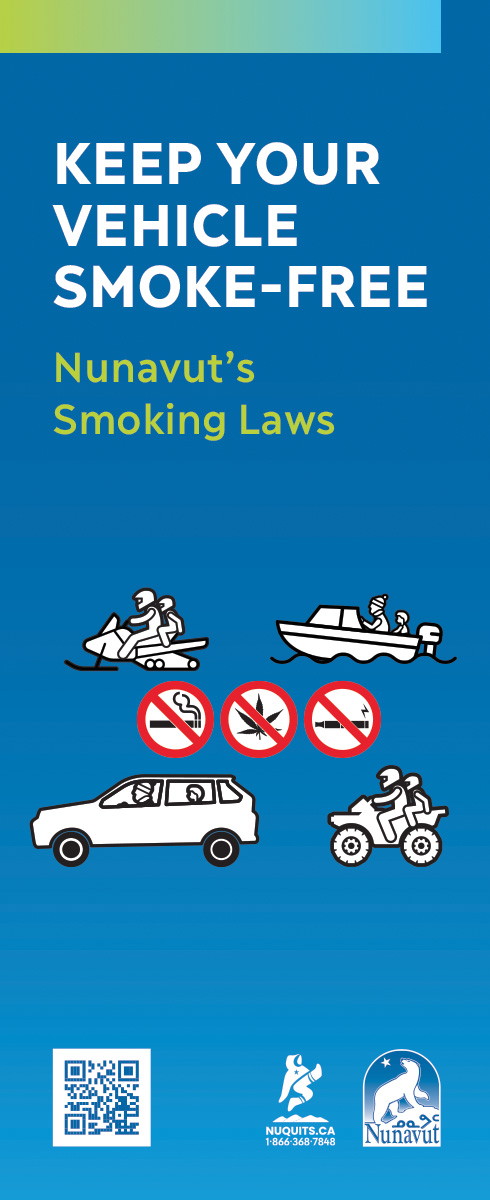
Smoking, vaping, or using cannabis in a motorized vehicle, like a car, boat, ATV, or snowmobile when someone under 19 years old is present is illegal.
This new law is meant to reduce exposure to second-hand smoke and protect the health of children and youth.
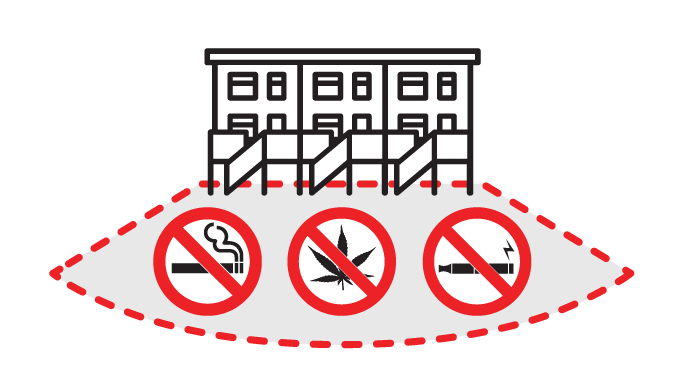
It is illegal to smoke, vape, or use cannabis in designated smoke-free places or buffer zones. A buffer zone is 9 metres from any entrance or exit to a building. This includes wheelchair ramps, walkways, stairs, landings, windows and air intakes.

Smoke-free places include:


Under the Tobacco and Smoking Act, it is against the law to:
In addition to territorial laws, there are federal tobacco laws that impact tobacco use and sale in Nunavut. The main one is called the Canada Tobacco and Vaping Products Act.
The goal of Canada’s Tobacco Strategy is to support Canadians in quitting smoking, reduce the harms of nicotine addiction, and protect the health of youth and non-tobacco users. It also mandates health warning labels on each cigarette, details how big these health warnings must be and puts restrictions on advertising tobacco products and vaping products.
The Tobacco Enforcement and Compliance Program ensures that all tobacco retailers in Nunavut are in compliance with the Nunavut Tobacco and Smoking Act and its regulations.
The program involves two areas for action:
Education and Outreach:
All tobacco retailers in possession of a valid Tobacco Retailer Permit, registered through the Department of Finance, will receive an education and outreach visit as well as a Tobacco Retailer Toolkit from an Environmental Health Officer (EHO).
Tobacco Inspections:
Regular tobacco inspections will ensure that tobacco retailers and their employees are in compliance with the Tobacco and Smoking Act (TSA) and the regulations.
This includes making sure that:
Environmental Health Officers

Environmental Health Officers work to promote public education, conduct inspections of tobacco retailers to ensure compliance with the Tobacco and Smoking Act and its regulations, and respond to complaints from the public.

To report any violation of these new laws at your workplace, contact the Workers Safety and Compensation Commission (WSCC) at 1-877-404-4407 or visit www.wscc.nt.ca.


For violations in another smoke-free place or a buffer zone like in front of a store, school ground or hospital ground, please contact the manager or the owner of the store as it is their responsibility to ensure that employees, patrons or visitors are complying with the smoking laws.

To file a complaint about another tenant’s use of tobacco, vape, or cannabis, call or email your Local Housing Organization or the Regional Nunavut Housing Corporation office.

For any other question or for more information, email the Department of Health’s Tobacco and Cannabis Program at tobacco@gov.nu.ca.